
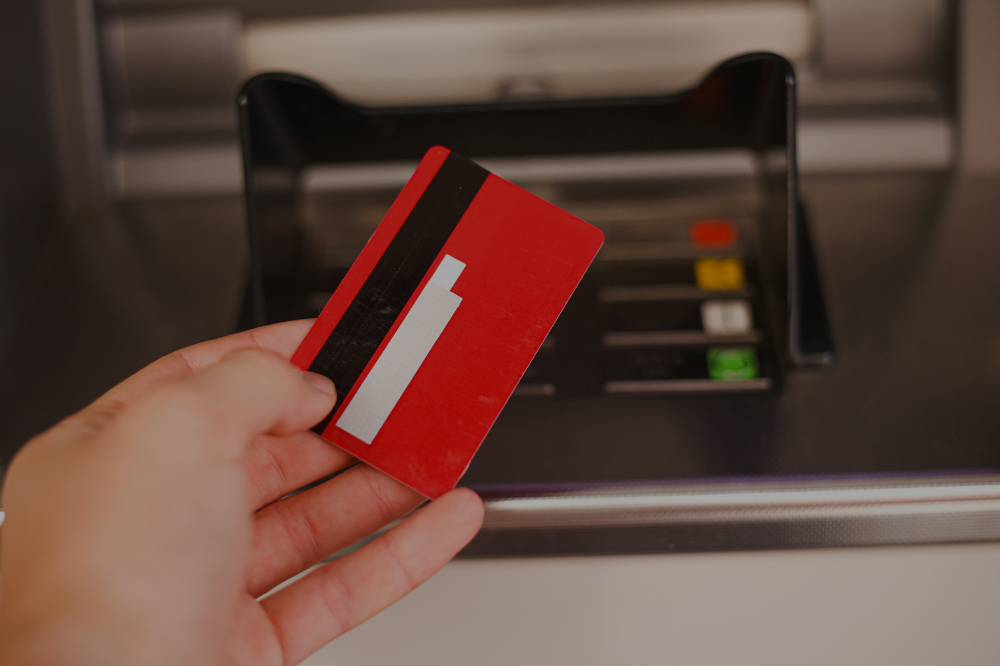
A debit card makes everyday purchases convenient, but using one can cost more than you expect. ATM withdrawals, account requirements, and certain transactions may trigger charges that quietly reduce your available balance.
Knowing where these costs come from can help you make smarter banking decisions. Here are five fees to watch for, how they work, and practical ways to avoid unnecessary expenses.
1. Out-of-Network ATM Fees
Withdrawing cash from an ATM outside your bank’s network can trigger more than one fee. Your bank may charge for the withdrawal, and the ATM operator may add a separate surcharge.
For example, Chase lists fees of $3 for certain withdrawals at non-Chase ATMs in the United States and $5 outside the country. The exact amount depends on the account, and the ATM owner may charge an additional fee.
These costs can add up quickly. If you withdraw cash four times a month and pay $3 per transaction, you could spend $144 a year on your bank’s withdrawal fees alone.
How to avoid this fee:
- Use your bank’s ATM locator to find in-network machines.
- Check whether your account reimburses out-of-network ATM fees.
- Get cash during a debit card purchase at participating retailers that offer cash back.
- Review the ATM screen before confirming a withdrawal, and cancel if the surcharge is too high.
Planning cash withdrawals around your regular errands can help you avoid repeated charges without changing your spending habits.
2. Overdraft Fees
An overdraft happens when a transaction exceeds the available balance in your checking account and the bank covers the difference. Depending on the account and transaction, the bank may charge an overdraft fee.
Imagine your balance is $15 and you make a $25 purchase. If your bank approves the transaction and charges a $34 overdraft fee, the purchase could leave you $44 below your original balance.
However, not every negative balance leads to an overdraft fee. Banks have different policies, and some decline transactions instead of paying them. In the United States, banks generally cannot charge overdraft fees for one-time debit card purchases and ATM withdrawals unless customers have opted in to the relevant overdraft service. Other transaction types, such as checks and recurring electronic payments, may follow different rules.
How to reduce the risk:
- Set low-balance alerts through your banking app.
- Keep a small buffer in your checking account when possible.
- Check pending transactions before making large purchases.
- Review your bank’s overdraft policy and opt-in settings.
A debit card can make it easy to spend without carrying cash, but checking your available balance helps prevent small purchases from becoming expensive mistakes.
3. Foreign Transaction Fees
Using your card abroad can cost extra, even when a purchase seems straightforward. Some banks charge a foreign transaction fee when you buy something in another currency or make a transaction processed outside the United States.
For example, certain Wells Fargo accounts charge a 3% foreign transaction fee on eligible purchases. If you spend $800 on hotels, meals, and transportation, a 3% fee would add $24 to the total.
The charge may apply to online purchases as well. Buying from an international retailer or paying for a service processed overseas could trigger a fee even when you never leave home.
Before traveling or shopping internationally:
- Check your account’s fee schedule for foreign purchases and ATM withdrawals.
- Compare cards that advertise no foreign transaction fees.
- When a payment terminal offers to charge you in U.S. dollars or the local currency, compare the terms carefully. Paying in dollars can involve an unfavorable conversion rate.
- Check whether your bank charges a separate fee for withdrawing foreign currency.
Reviewing these details before a trip can help you estimate your costs and choose a payment method that fits your plans.
4. Monthly Maintenance Fees
Some checking accounts charge a monthly maintenance fee simply for keeping the account open. Because the bank deducts the amount automatically, you might overlook it if you rarely review your statements.
For example, Wells Fargo’s Everyday Checking account lists a $15 monthly service fee, although eligible customers can qualify for a waiver by meeting specified requirements. Those conditions can include qualifying electronic deposits or maintaining a required balance, depending on the bank’s current terms.
A $15 charge may seem small, but it totals $180 over 12 months. That money could otherwise cover groceries, transportation, or other regular expenses.
Ways to avoid monthly charges:
- Check whether your account has a maintenance fee.
- Find out which requirements qualify you for a waiver.
- Consider a checking account with no monthly service fee.
- Review your statement regularly to confirm that the bank applies any eligible waiver.
If you consistently struggle to meet your account’s requirements, switching to a lower-cost option may be more practical than trying to maintain a balance solely to avoid fees.
5. Debit Card Replacement Fees
Losing a card does not always mean paying for a replacement, but expedited delivery can come with a charge. Some banks provide standard replacement cards at no cost while charging customers who need a new card delivered faster.
Chase, for example, lists a $15 fee for expedited replacement on certain accounts or services. Policies can vary, so check the terms that apply to your account before requesting delivery.
This fee may be especially frustrating when your card is lost just before a trip or when you need immediate access to your money.
What you can do:
- Ask whether standard replacement is free.
- Check the estimated delivery time before paying for expedited shipping.
- Lock a misplaced card through your banking app while you look for it, if your bank offers that feature.
- Report a card as lost or stolen promptly if you believe someone else may have it.
You may not be able to prevent every replacement cost, but understanding your options can help you avoid paying for a faster service you do not need.
How to Keep Debit Card Fees Under Control
You do not necessarily need to change banks to spend less on banking fees. Start by reviewing your latest statement and identifying recurring charges, ATM fees, and transaction-related costs.
Then take three practical steps:
- Read your account’s fee schedule. Look for monthly charges, ATM costs, overdraft policies, foreign transaction fees, and replacement services.
- Use account alerts. Notifications for low balances and completed transactions can help you spot potential problems sooner.
- Compare alternatives. If your current account regularly charges fees you cannot avoid, consider an account with terms that better match your habits.
A debit card should make everyday payments easier, not create avoidable expenses. A few minutes spent reviewing your account can help you understand what you pay and decide which charges you can eliminate.
Frequently Asked Questions
Do all debit cards have hidden fees?
No. Fees depend on the bank, account type, and transaction. Some accounts offer no monthly maintenance fee, reimburse eligible ATM charges, or waive certain foreign transaction costs. Review the fee schedule before choosing an account.
Can I be charged for using my debit card in the United States?
Yes, in some circumstances. You might pay an out-of-network ATM fee, a monthly account fee, or an overdraft fee when applicable rules and account terms allow it. Ordinary purchases at U.S. retailers do not automatically carry a fee simply because you use a debit card.
How can I check which fees my bank charges?
Review your monthly statement and your bank’s account fee schedule. You can also search the bank’s website for your specific checking account or contact customer service to clarify charges you do not recognize.
Is a debit card cheaper than a credit card?
It depends on how you use each product. A debit card draws money from your checking account, while a credit card lets you borrow up to a limit and may charge interest if you carry a balance. Both can involve fees, so compare the terms and costs rather than assuming one is always cheaper.