
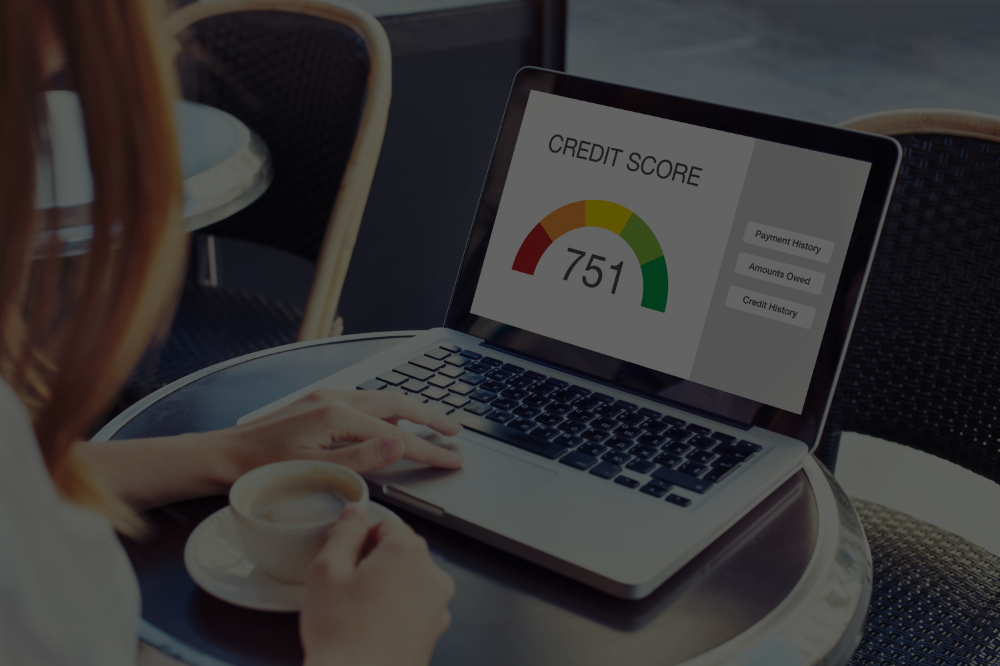
Your credit score is the most influential number in your financial life. It dictates the APR you pay on your mortgage, the likelihood of your auto loan approval, and even your ability to rent a premium apartment. When your score is low, you are essentially paying a “poverty tax” through higher interest rates and missed opportunities.
The good news is that while building a perfect profile takes years, you can fix credit score fast by exploiting the way the bureaus calculate your data. By targeting specific “quick-win” metrics like credit utilization and reporting errors, you can see a significant point jump in a single billing cycle. Here is the no-nonsense guide to repairing your credit in 30 days.
1. The “Rapid Rescore” Strategy
If you are in the middle of a mortgage application and need a sudden boost, ask your lender about a “Rapid Rescore.” Unlike a standard update that takes 30 to 45 days, a rapid rescore can update your FICO score in as little as three to five business days.
You provide proof that a debt has been paid down or a mistake has been corrected, and your lender submits this directly to Equifax, Experian, and TransUnion. This bypasses the traditional monthly reporting cycle and can move your score just in time for a loan closing.
2. Destroy Your Credit Utilization Ratio
Your “Credit Utilization”—the amount of debt you owe relative to your total limits—accounts for 30% of your score. To fix credit score fast, you need to get this number below 10%. If you have a $10,000 limit and a $4,000 balance, your 40% utilization is dragging you down.
A “no-nonsense” hack is to pay your bill before the statement closing date, not the due date. The balance on your statement is what gets reported to the bureaus. If you pay it off early, the bank reports a $0 balance, which can trigger an immediate and dramatic score increase.
3. Become an “Authorized User”
This is often called “credit piggybacking.” If a family member has a long-standing credit card with a perfect payment history and a high limit, ask them to add you as an authorized user. You don’t even need to use the physical card.
The entire history of that account is then imported onto your credit report. For someone with a “thin” credit file, this can increase a score by 50 to 100 points almost overnight. Ensure the card issuer reports authorized users to all three bureaus before proceeding.
4. Dispute Inaccuracies via the CFPB
Inaccuracies are more common than most realize. Under the Fair Credit Reporting Act, you have the right to dispute any information that is not 100% accurate. Common errors include “zombie” debts that should have fallen off after seven years or accounts that don’t belong to you.
Don’t just use the bureau’s online dispute tools, which can sometimes limit your legal rights. Send a certified letter or use the Consumer Financial Protection Bureau (CFPB) portal. Once a bureau receives a dispute, they have 30 days to investigate. If they cannot verify the debt, they must remove it by law.
5. Request a Credit Limit Increase
If you cannot afford to pay down your balances right now, you can improve your utilization ratio by increasing your “denominator.” Call your card issuers, such as Chase or Capital One, and request a limit increase.
The key is to ask for a “soft pull” increase so it doesn’t result in a Hard Inquiry. If your $5,000 limit becomes a $10,000 limit and your balance stays the same, your utilization is cut in half instantly. This is a powerful way to fix credit score fast without spending a dime.
6. The “Micropayment” Habit
Instead of making one large payment at the end of the month, make small payments every time you get paid. These are often called “buffer payments.”
This habit ensures that your average daily balance remains low. Because many credit card algorithms snapshot your data at random times, having a consistently low balance protects you from a sudden “utilization spike” if they pull your data mid-month.
7. Use “Experian Boost” for Instant Points
For an immediate, albeit usually modest, increase, use Experian Boost. This free service allows you to link your bank account to your credit file so that your on-time utility, phone, and even streaming service payments (like Netflix) count toward your score.
Traditionally, these “non-traditional” bills only hurt your score if you went to collections. Now, they can help. Most users see an average increase of 10 to 13 points immediately after syncing their accounts.
Why DTI Matters as Much as Your Score
While you work to fix credit score fast, don’t ignore your Debt-to-Income (DTI) ratio. Even with a 750 score, a lender might reject you if 50% of your income is already going toward debt.
A high credit score gets you the best APR, but a low DTI gets you the approval. Aim to keep your total monthly debt obligations below 36% of your gross monthly income. This combined with a rising credit score makes you an “A-tier” borrower in the eyes of any bank.
Avoiding “Credit Repair” Scams
Be wary of companies that promise to “erase your bad credit” for an upfront fee. No one can legally remove accurate negative information from your report. Everything a credit repair company does for a fee, you can do yourself for free.
If a company suggests you “create a new identity” with a CPN (Credit Privacy Number), walk away. This is a federal crime. Stick to the legitimate hacks mentioned above to protect your long-term financial standing and avoid a permanent ban from major lenders.
Your Path to Financial Leverage
Fixing your credit is about reclaiming your power. In 30 days, you can move from a “subprime” borrower to a “prime” one, saving yourself thousands of dollars in interest over the life of your next loan. Use these hacks with discipline, monitor your progress weekly, and treat your credit score as the high-value asset it is. The work you do this month will pay dividends for years to come.
FAQ: Fix Credit Score Fast
If your score is low due to high utilization, you can gain 30–100 points in a month by paying down balances. If your score is low due to a recent bankruptcy, the gains will be much slower.
No. Checking your own score via Credit Karma, AnnualCreditReport.com, or your bank app is a “soft inquiry” and has zero impact on your rating.
Write a “Goodwill Letter” to the creditor. If you have a long history of on-time payments, they may agree to remove a one-time slip-up as a courtesy.
No. Closing an old account reduces your total available credit (hurting utilization) and shortens your “length of credit history.” Keep them open and put a small charge on them once a year to keep them active.