
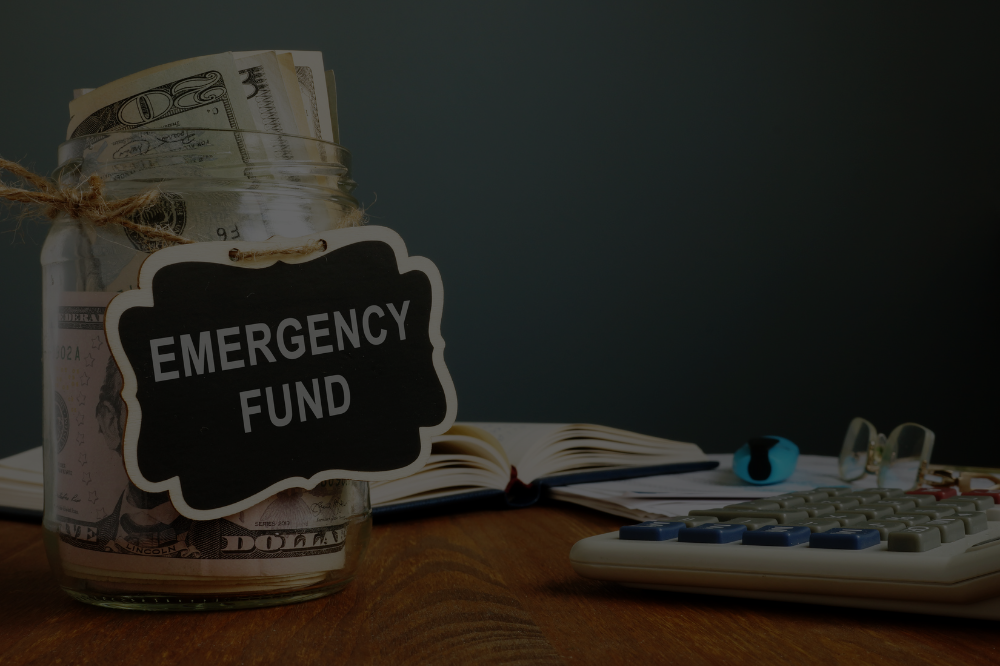
An unexpected car repair or a sudden medical bill can derail years of financial progress in a single afternoon. If you are living paycheck to paycheck, the idea of extra money feels like a myth. However, a liquid safety net is the only thing standing between you and high-interest credit card debt.
Most financial advisors suggest three to six months of expenses, but for many, that number is so high it leads to paralysis. Your first mission is simpler and more urgent: you must build emergency fund fast by hitting the $1,000 milestone. This is the “starter” fund that handles the “inconveniences” before they become “catastrophes.”
Why the First $1,000 is a Psychological Game-Changer
Financial stability is as much about mindset as it is about mathematics. When you have zero savings, every flashing “Check Engine” light feels like a threat to your survival. Once you have $1,000 sitting in a high-yield savings account at a bank like Capital One or Marcus by Goldman Sachs, your stress levels drop.
This fund acts as a buffer for your Debt-to-Income (DTI) ratio. Without it, you are forced to use credit cards, increasing your credit utilization and potentially triggering a Hard Inquiry if you need to apply for an emergency personal loan.
Step 1: Audit Your Cash Flow Without Mercy
To build emergency fund fast, you need to find “leaked” capital. Use the Consumer Financial Protection Bureau (CFPB) worksheets to track every dollar for 14 days. You aren’t looking for coffee money; you are looking for structural waste.
Check your bank statements for “zombie subscriptions”—apps, streaming services, or gym memberships you no longer use. Redirecting $50 a month from a forgotten subscription to your savings account gets you 5% of the way to your goal immediately.
The “Anti-Budget” Strategy
If traditional budgeting feels restrictive, try the “Pay Yourself First” model. Set up an automatic transfer of $25 or $50 every Friday from your checking account to a separate savings account. If the money is gone before you can spend it, you will naturally adjust your lifestyle to the remaining balance.
Step 2: Leverage Windfalls and Tax Optimization
One of the fastest ways to seed your fund is to stop giving the government an interest-free loan. If you typically receive a large refund from the IRS, you are over-withholding.
By adjusting your Form W-4 with your employer, you can increase your take-home pay each month. That extra $100 or $200 per paycheck should be routed directly into your emergency fund. This allows you to build emergency fund fast using money you were already earning but weren’t seeing until the following spring.
High-Yield Placement
Don’t let your emergency fund sit in a standard checking account earning 0.01%. Look for an Annual Percentage Yield (APY) that beats inflation. Online banks often offer significantly higher rates than traditional brick-and-mortar institutions, allowing your money to grow through Compound Interest while it sits idle.
Step 3: The “Inflow Increase” Phase
Cutting expenses has a floor—you can only cut so much. Increasing income has no ceiling. If you want to hit your $1,000 goal in under 90 days, you need an inflow boost.
Consider “Digital Decluttering.” Selling unused electronics, furniture, or clothes on platforms like Facebook Marketplace or eBay can generate $300 to $500 in a single weekend. Deposit this cash immediately. Do not leave it in your Venmo or PayPal balance, as it is too easy to spend from there.
Step 4: Protect Your Progress from “Urgency Creep”
The biggest threat to your fund is misidentifying what constitutes an “emergency.” A flash sale on a new laptop is not an emergency. A weekend trip with friends is not an emergency.
Defining an Emergency
- Unexpected: You didn’t see it coming.
- Necessary: You cannot function (work, eat, sleep safely) without it.
- Urgent: It must be handled immediately.
If the expense doesn’t meet all three criteria, keep your hands off the $1,000. Maintaining this discipline prevents you from having to restart your progress every time a minor temptation arises.
Step 5: Master the “Round-Up” and Micro-Savings
Modern banking tools have made it easier than ever to save small amounts. Many fintech apps and traditional banks like Bank of America offer “round-up” features.
Every time you spend $4.25 on a transit fare, the bank rounds the transaction to $5.00 and moves the $0.75 into your savings. While it won’t get you to $1,000 alone, it creates a constant, passive stream of deposits that speeds up your timeline.
The Impact on Your Credit and Future Wealth
Building this fund is a defensive play for your FICO score. When a real emergency hits, people without savings often miss utility payments or credit card minimums to cover the cost. A single 30-day late payment can tank a credit score by 100 points.
By having that $1,000 available, you ensure that your bills stay paid and your credit remains pristine. This allows you to qualify for lower APR rates in the future, saving you thousands of dollars in interest over your lifetime.
Navigating Temporary Setbacks
If you have to dip into your fund, don’t view it as a failure. That is exactly what the money was there for. The goal isn’t to keep the $1,000 forever; it’s to have it available when the “storm” hits.
The moment you spend $400 on a new alternator for your car, your new primary financial goal is to replenish that $400. This cycle of saving and utilizing is the heartbeat of a healthy financial life.
Beyond the First Thousand
Once you hit the $1,000 mark, do not stop. The momentum you’ve built is your most valuable asset. The “No-Nonsense” approach suggests moving next toward a one-month “buffer” of all your core expenses—rent, groceries, and debt obligations.
According to data from the Federal Reserve, a significant percentage of adults cannot cover a $400 emergency with cash. By hitting $1,000, you have already moved into a higher tier of financial security than nearly half the population.
Breaking the Cycle of Financial Fragility
The journey to build emergency fund fast is less about the $1,000 and more about the habits you form. You are proving to yourself that you can control your cash flow rather than letting it control you.
Whether you are navigating the complexities of a 401(k) or just trying to keep your head above water, this cash reserve is your foundation. Start today by moving $5. The amount matters less than the action. Consistency is the only “secret” to wealth that actually works for everyone.