
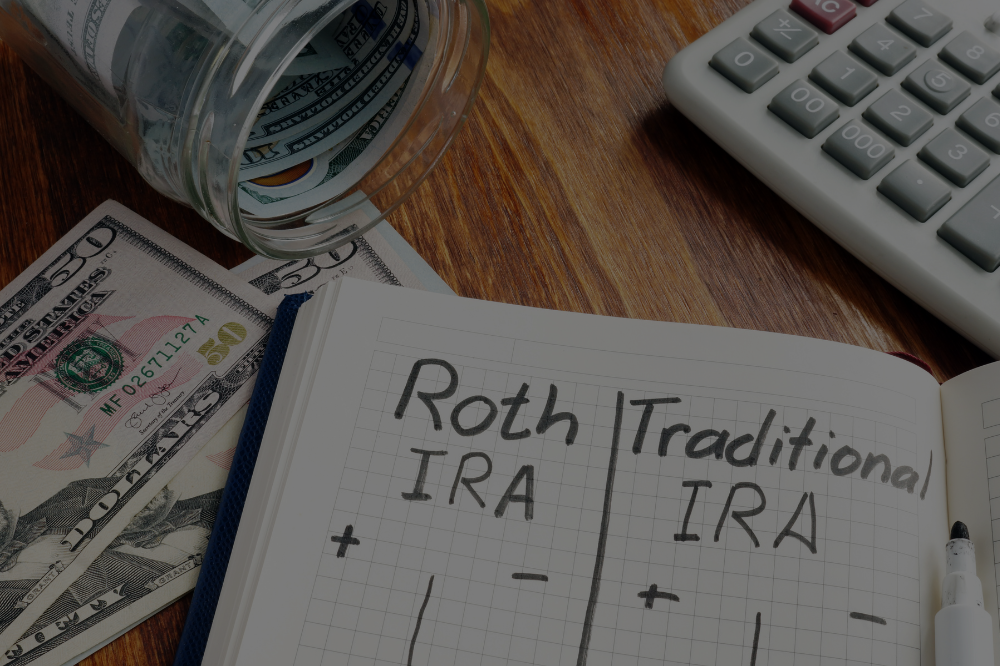
Choosing between a Roth IRA vs Traditional IRA is one of the most important retirement planning decisions you’ll make. Both accounts offer valuable tax advantages, but they work differently depending on when you pay taxes.
This guide compares the two IRA types, explains how each one is taxed, and helps you decide which may be the better fit based on your income, retirement goals, and future tax expectations.
Roth IRA vs Traditional IRA: Quick comparison
| Feature | Roth IRA | Traditional IRA |
|---|---|---|
| Contributions | Made with after-tax dollars | May be tax-deductible if you qualify |
| Taxes on qualified withdrawals | Tax-free | Generally taxable |
| Taxes today | Pay taxes now | Potential tax deduction now |
| Required Minimum Distributions (RMDs) | None during the original owner’s lifetime | Required beginning at the applicable IRS age |
| Income limits to contribute | Yes | No income limit for contributions, but deductions may be limited |
| Best for | People expecting higher taxes in retirement | People expecting lower taxes in retirement |
What is a Roth IRA?
A Roth IRA is an individual retirement account funded with money that has already been taxed.
Because contributions aren’t tax-deductible, you don’t receive an immediate tax break. In exchange, qualified withdrawals—including investment earnings—can be completely tax-free once IRS requirements are met.
Another major advantage is that the original account owner is not required to take Required Minimum Distributions (RMDs), allowing investments to continue growing throughout retirement.
What is a Traditional IRA?
A Traditional IRA allows eligible taxpayers to make contributions that may be partially or fully deductible on their federal income tax return.
Instead of paying taxes now, you generally defer taxes until retirement. When you begin taking distributions, both deductible contributions and investment earnings are typically taxed as ordinary income.
Unlike a Roth IRA, Traditional IRAs are subject to Required Minimum Distribution (RMD) rules once you reach the age established by the IRS.
The biggest difference: Pay taxes now or later?
The primary distinction comes down to timing.
With a Roth IRA, you pay income tax before making your contribution. If you meet the IRS requirements for qualified distributions, withdrawals in retirement are generally tax-free.
With a Traditional IRA, you may reduce your taxable income today through deductible contributions. However, you’ll generally owe income tax when withdrawing money during retirement.
Because no one knows future tax rates, choosing between the two often depends on whether you believe your tax bracket will be higher or lower after you retire.
When a Roth IRA may be the better choice
A Roth IRA is often attractive if:
- you’re early in your career and currently in a lower tax bracket;
- you expect your income to increase significantly over time;
- you want tax-free qualified withdrawals during retirement;
- you don’t want Required Minimum Distributions during your lifetime;
- you plan to leave retirement assets to beneficiaries.
Although contributions are made with after-tax dollars, many investors value the long-term tax-free growth and greater withdrawal flexibility.
When a Traditional IRA may be the better choice
A Traditional IRA may be a better option if:
- you’re currently in a higher tax bracket;
- you qualify for a deductible contribution;
- you expect to pay a lower tax rate in retirement;
- you want to reduce your taxable income this year.
The immediate tax deduction can provide valuable savings today, particularly for workers in their peak earning years. However, keep in mind that withdrawals in retirement are generally subject to federal income tax, and Required Minimum Distributions must begin once you reach the applicable IRS age.
Can you have both a Roth IRA and a Traditional IRA?
Yes. The IRS allows eligible taxpayers to own both types of IRA at the same time.
However, your total annual contributions across all IRAs cannot exceed the IRS contribution limit for the year.
Some investors use both accounts as part of a tax diversification strategy, allowing them to have both taxable and tax-free income sources during retirement.
Which IRA should you choose?
There’s no universal winner in the Roth IRA vs Traditional IRA debate. The better choice depends on your current financial situation and your expectations for retirement.
A Roth IRA generally makes more sense if you believe you’ll be in a higher tax bracket later or value tax-free qualified withdrawals.
A Traditional IRA may be preferable if lowering your taxable income today is a priority and you expect to pay less tax after retiring.
If you’re unsure, consulting a qualified tax professional or financial advisor can help determine which option best aligns with your retirement strategy.
Frequently Asked Questions (FAQ)
Can I contribute to both a Roth IRA and a Traditional IRA in the same year?
Yes. You may contribute to both accounts during the same tax year, provided your combined contributions do not exceed the annual IRS contribution limit.
Are Roth IRA contributions tax-deductible?
No. Roth IRA contributions are made with after-tax dollars and generally do not reduce your taxable income.
Can I withdraw my Roth IRA contributions anytime?
In general, you can withdraw your direct Roth IRA contributions at any time without taxes or penalties. Different rules may apply to investment earnings and converted amounts.
Does a Traditional IRA always reduce my taxes?
Not necessarily. Whether your contribution is deductible depends on factors such as your income, filing status, and whether you or your spouse are covered by a retirement plan at work.
What happens if I exceed the IRA contribution limit?
Excess contributions may be subject to IRS penalties if they are not corrected within the applicable deadlines. The IRS provides procedures for removing or correcting excess contributions.