
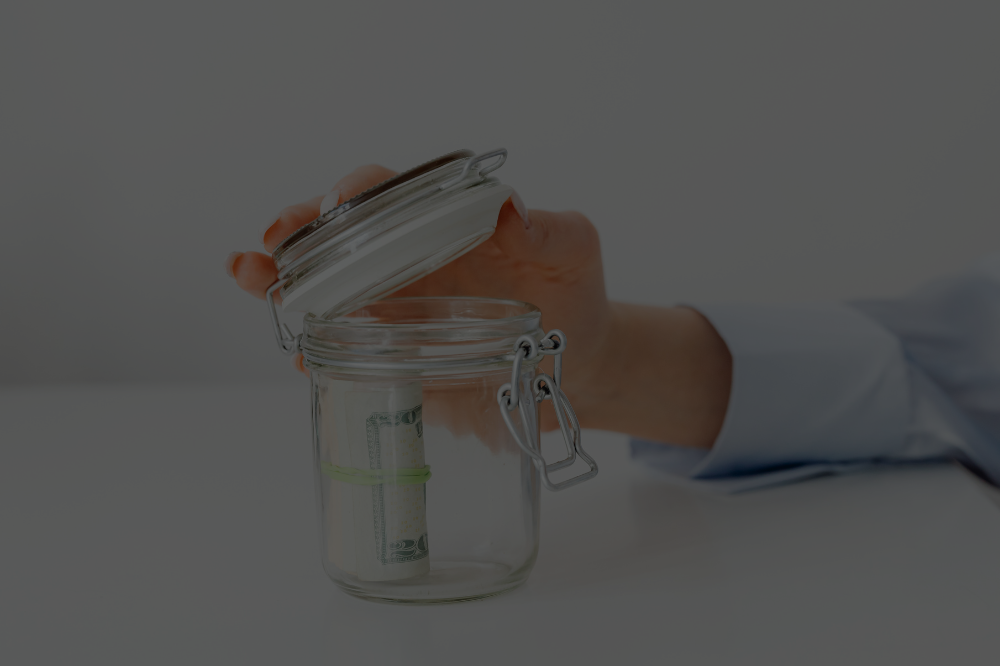
Starting with $0 in savings can make an emergency fund feel out of reach. But learning how to build an emergency fund does not mean saving thousands of dollars overnight. The better approach is to build protection in stages, starting with a small cash buffer and increasing it as your finances allow.
This guide shows how to choose your first target, decide what actually belongs in the fund, find room in a tight budget and build a system that keeps working after your first emergency.
Start With Your First Emergency Fund Target
Do not make “three to six months of expenses” your first hurdle.
When you have no savings, a smaller target can give you protection much sooner. The CFPB recommends starting with an amount that makes sense for your financial situation instead of waiting until you can afford a large reserve.
A practical progression can look like this:
- $250: first layer of protection
- $500: useful buffer for smaller unexpected costs
- $1,000: stronger starter fund
- 1 month of essential expenses: next major milestone
- 3+ months of essential expenses: longer-term goal
These are milestones, not official requirements. Your first goal should be large enough to help and small enough to reach.
Decide What Your Emergency Fund Needs to Cover
Instead of copying someone else’s savings target, look at the risks in your own life.
Think about expenses that could create a financial problem if they happened this month:
- a major car repair;
- an unexpected medical bill;
- an urgent home or appliance repair;
- a temporary loss of income.
The Federal Reserve’s latest household survey found that major vehicle repairs or replacements were the most commonly reported major unexpected expense in 2025, followed by major house or appliance repairs and unexpected major medical expenses.
That makes your own circumstances important when deciding how much protection you need.
A simple way to estimate your target
Add up your essential monthly expenses:
Housing + utilities + food + transportation + insurance + minimum debt payments + essential healthcare
Then consider how long you could realistically manage without your main source of income.
That gives you a more useful long-term target than choosing a number simply because it is popular online.
Don’t Use Your Emergency Fund for Predictable Bills
A common problem is treating every large expense as an emergency.
Some costs are expensive but still predictable.
| Emergency expense | Planned expense |
|---|---|
| Unexpected car repair | Routine maintenance |
| Emergency medical bill | Regular healthcare expenses |
| Sudden job loss | Planned vacation |
| Urgent appliance replacement | Annual insurance payment |
| Unexpected home repair | Holiday spending |
Planned costs deserve their own savings categories, often called sinking funds.
Keeping them separate protects your emergency savings from being drained before a real crisis happens.
Turn Your Goal Into a Monthly Number
A big target becomes easier to manage when you turn it into smaller contributions.
Use:
Amount left to save ÷ months available = monthly contribution
For example:
You have $300 and want to reach $1,500 in 6 months.
$1,200 ÷ 6 = $200 per month
You can also divide that amount across your paychecks.
The goal is not to choose the biggest contribution possible. It is to choose one you can maintain without creating another problem in your budget.
Make the Savings Automatic
Once you decide how much to save, make the transfer happen without relying on motivation.
Set an automatic transfer from checking to savings shortly after payday.
Another option is to send part of your direct deposit straight to a savings account.
The CFPB recommends automatic transfers as a way to make saving more consistent. It also highlights one-time money, such as tax refunds, as an opportunity to boost emergency savings.
Use two types of contributions
Regular money: your planned amount from each paycheck.
Extra money: tax refunds, bonuses, gifts or side-income payments.
You do not have to choose between consistency and speed. Your regular contribution builds the habit, while extra money can shorten the timeline.
How to Build an Emergency Fund on a Tight Budget
A tight budget requires a different strategy.
Do not wait for a month when you can suddenly save hundreds of dollars. Find an amount that fits into your current cash flow.
That could mean:
- $10 per week;
- $25 per paycheck;
- $50 per month;
- a percentage of irregular income.
Even a small recurring transfer gives you a system to build on.
The Federal Reserve found a strong relationship between having money left over at the end of the month and having enough savings to cover three months of expenses.
In 2025, 86% of adults who always had money left over reported having three months of emergency savings, compared with 13% of those who never had money left over.
That makes improving monthly cash flow just as important as choosing a savings amount.
Look for Recurring Savings, Not Endless Sacrifices
You do not need to eliminate every enjoyable expense to start saving.
Focus first on changes that can create room month after month.
For example:
- cancel subscriptions you rarely use;
- renegotiate services when possible;
- reduce avoidable bank fees;
- redirect part of a raise;
- send a fixed percentage of side income to savings.
A $40 monthly reduction that stays in your budget can be more useful than making ten temporary cuts you will abandon after a few weeks.
Keep the Money Accessible but Separate
Your emergency fund needs to be available when something goes wrong.
At the same time, keeping it in your everyday checking account can make it easier to spend accidentally.
A separate savings account can create a useful barrier between emergency money and everyday spending.
For many people, an insured bank or federally insured credit union provides an appropriate place for this type of cash reserve.
The goal is accessibility, safety and separation, not investment growth.
How Much Should You Ultimately Save?
Once you have built a starter fund, move toward a larger reserve based on your essential expenses.
Three months of expenses is a common measure of financial resilience, and 55% of U.S. adults said they had savings set aside for three months of expenses in 2025.
But your own target may differ.
You may want a larger reserve if you:
- have irregular income;
- are self-employed;
- support dependents;
- have high fixed expenses;
- work in a less stable industry.
The important distinction is between your starter fund and your full emergency reserve. They serve different stages of the same plan.
What If You Have Credit Card Debt?
This is where rigid savings advice can backfire.
Putting every available dollar toward debt can leave you with no cash when the next unexpected expense arrives. Saving aggressively while carrying expensive credit card debt can also be costly.
A practical middle ground is:
1. Build a small cash buffer.
2. Keep contributing enough to maintain the habit.
3. Put more available money toward high-interest debt.
4. Increase your emergency savings after the expensive debt is under control.
The right balance depends on your interest rate, income stability and current cash reserves.
When Should You Actually Use the Fund?
A fund that never gets touched is not necessarily a successful fund. Its purpose is to absorb financial shocks.
Before withdrawing money, ask:
Is the expense unexpected?
Is it necessary?
Would delaying it create a bigger problem?
A broken furnace in winter can qualify.
A new television because your current one feels outdated probably does not.
The clearer your definition of an emergency, the easier it becomes to protect the money for situations that genuinely need it.
What to Do After You Use Your Emergency Fund
Using the money is part of the plan. Once the emergency passes, check your new balance and choose the next rebuilding target.
You do not necessarily need to replace the entire amount immediately.
A simple recovery process is:
Assess → stabilize → rebuild → return to normal contributions
For example, if you had $2,000 and used $1,200 for an emergency, your next goal could be restoring the account to $1,000 before rebuilding the full $2,000.
That can make the recovery feel more manageable.
How to Build an Emergency Fund With Irregular Income
A fixed monthly contribution does not work well for everyone.
Freelancers, commission-based workers and seasonal employees may have months that look completely different from one another.
Instead, use a baseline + percentage system.
For example:
- save at least $50 during a slow month;
- save 10% of income above your normal baseline during stronger months.
This protects the habit without pretending that your income is predictable.
How Long Does It Take to Build an Emergency Fund?
That depends entirely on your starting balance and contribution.
For a $1,000 goal:
- $50 per month: 20 months
- $100 per month: 10 months
- $200 per month: 5 months
- $250 per month: 4 months
Extra income can shorten those timelines.
The useful question is not “How fast should I finish?” but “What contribution can I keep making even when life gets expensive?”
Frequently Asked Questions
How do I build an emergency fund from zero?
Choose a small first target, set a recurring contribution and keep the money separate from everyday spending. Once you reach that first milestone, increase the goal based on your essential expenses and income stability.
Is $1,000 a good emergency fund?
$1,000 can be a useful starter target, but it may not cover a major repair, medical expense or period without income. Treat it as an early milestone rather than a universal final goal.
How much should an emergency fund cover?
A common long-term benchmark is three months of expenses, but your ideal amount depends on your essential costs, income stability and household responsibilities.
What is the difference between an emergency fund and a sinking fund?
An emergency fund covers unexpected and necessary expenses. A sinking fund helps you prepare for costs you expect, such as insurance, annual bills, holidays or routine maintenance.
Should I build an emergency fund while paying off debt?
A small cash buffer can help prevent an unexpected expense from becoming new debt. After establishing that buffer, you can direct more money toward high-interest balances.
Where should I keep my emergency fund?
Keep it somewhere safe, accessible and separate from your everyday spending. A dedicated savings account can provide that separation while keeping the money available.
What counts as an emergency?
An emergency is generally an unexpected and necessary expense that your normal monthly budget cannot comfortably absorb, such as a major repair, unexpected medical cost or sudden loss of income.
How do I rebuild my emergency fund after using it?
Start with a smaller recovery target, resume regular contributions and direct extra income toward the account when possible. Once the immediate cushion is restored, work back toward your full target.