
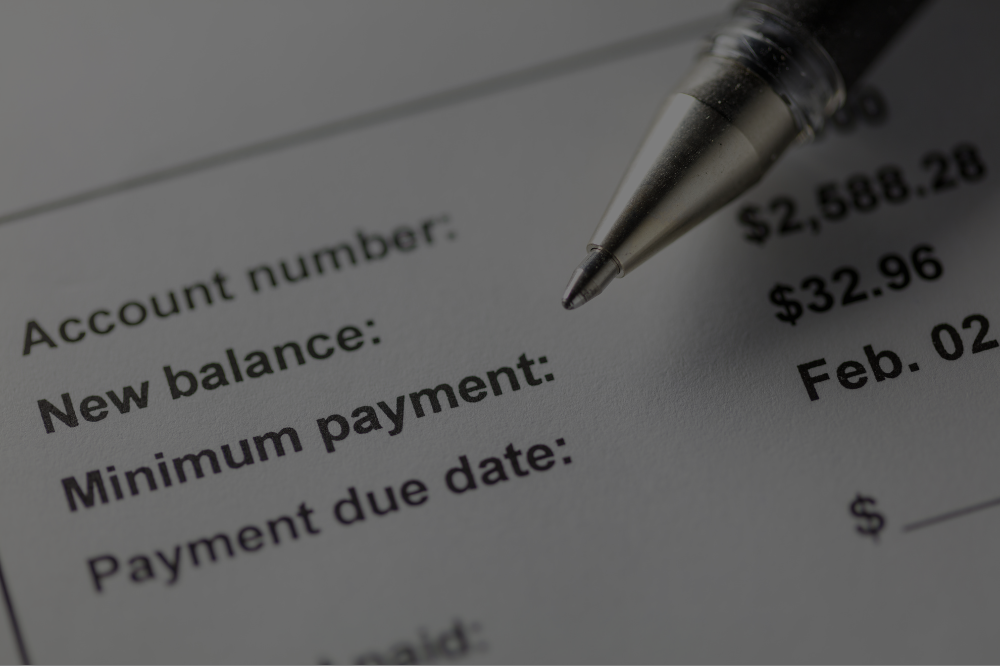
Making the minimum credit card payment may seem like an easy way to stay on top of your bills when money is tight. It keeps your account in good standing and helps you avoid late payment penalties, but it can also make credit card debt much more expensive over time.
In this article, you’ll learn how the minimum credit card payment is calculated, why it can slow down debt repayment, and what alternatives may help you get out of debt faster.
What is the minimum credit card payment?
The minimum payment is the smallest amount your credit card issuer requires you to pay each billing cycle to keep your account current.
As long as you make at least this payment by the due date, your account generally remains in good standing. However, any unpaid balance continues to accrue interest unless your balance is paid in full.
Every issuer has its own formula, but the minimum payment is typically based on:
- a percentage of your outstanding balance;
- interest charges;
- applicable fees;
- any past-due amount.
Because the required payment is relatively small, many cardholders choose this option during financial difficulties. While it provides short-term relief, it often extends the time needed to eliminate the debt.
How is the minimum payment calculated?
There isn’t one universal formula for calculating the minimum payment.
Most major U.S. credit card issuers use a percentage of the outstanding balance—often around 1% to 3%—then add accrued interest and any applicable fees. Some issuers also set a fixed minimum dollar amount for smaller balances.
For example, if you owe several thousand dollars, the required payment may represent only a small fraction of your total balance.
That’s why your monthly payment may feel manageable even though your debt decreases very slowly.
What happens if you only make the minimum payment?
Paying only the minimum every month can keep you trapped in debt for much longer than expected.
Since a large portion of each payment covers interest charges instead of reducing the principal, your balance declines slowly. The longer the debt remains, the more interest you’ll pay overall.
Over time, relying only on the minimum payment may lead to:
- higher total borrowing costs;
- years of additional repayment;
- reduced financial flexibility;
- difficulty qualifying for new credit because of high utilization.
While making the minimum payment is far better than missing a payment entirely, it should not become a long-term strategy.
Why does credit card debt take so long to disappear?
Many borrowers are surprised by how slowly their balance falls even after making payments every month.
The main reason is compound interest. As interest continues to accrue on the remaining balance, only part of each payment reduces the original amount borrowed.
If you continue making new purchases while paying only the minimum, the repayment period becomes even longer.
This cycle explains why someone with a large balance may spend years paying off debt despite never missing a payment.
How much can the minimum payment really cost?
The true cost of making only the minimum payment depends on your balance, interest rate, and your card issuer’s payment formula. However, one thing is consistent: the less you pay each month, the more interest you’ll pay over the life of the debt.
Imagine you have a balance of $5,000 with a high annual percentage rate (APR). If you only make the required minimum payment each month, it could take many years to pay off the balance, and the total interest paid may reach thousands of dollars.
By comparison, increasing your monthly payment—even by a modest amount—can significantly shorten the repayment period and reduce the total interest you owe.
This is why financial experts often recommend paying as much as your budget allows instead of relying solely on the required minimum.
When is paying only the minimum a reasonable option?
Although paying only the minimum is generally not ideal, there are situations where it can be the best available choice.
For example, it may help if you’re:
- dealing with a temporary loss of income;
- facing unexpected medical or emergency expenses;
- prioritizing essential bills such as housing or utilities;
- working through a short-term financial setback.
In these situations, making at least the minimum payment protects your payment history and helps you avoid late fees or penalty APRs.
The key is to return to larger payments as soon as your financial situation improves.
How to break the minimum payment cycle
Escaping long-term credit card debt usually requires a clear repayment strategy rather than simply paying whatever appears on the statement.
Some practical ways to reduce your balance faster include:
- paying more than the minimum every month;
- making extra payments whenever possible;
- focusing on the highest-interest card first;
- avoiding new credit card purchases while repaying debt;
- reviewing your monthly budget to free up additional cash.
Even small increases in your monthly payment can reduce repayment time considerably because more of your money goes toward the principal instead of interest.
If your debt feels overwhelming, consider speaking with a nonprofit credit counseling agency to explore repayment options.
Making a smarter repayment decision
The minimum credit card payment serves an important purpose by helping cardholders avoid delinquency, but it should not be viewed as a long-term debt management strategy. While it provides temporary financial flexibility, relying on it month after month often leads to higher interest costs and a much longer repayment period.
Whenever possible, paying more than the minimum is one of the simplest ways to reduce interest charges and become debt-free sooner.
Frequently Asked Questions (FAQ)
Does paying the minimum hurt my credit score?
Making the minimum payment on time generally does not hurt your credit score. However, carrying high balances may increase your credit utilization ratio, which can negatively affect your score.
Is paying only the minimum considered a late payment?
No. As long as the minimum payment is received by the due date, your account is considered current.
Why doesn’t my balance decrease very much?
Because much of the minimum payment goes toward interest charges, only a small portion reduces the principal balance.
Can I pay more than the minimum payment?
Yes. You can pay any amount above the minimum, and doing so reduces your balance faster while lowering future interest costs.
What happens if I miss the minimum payment?
Missing the required payment may result in late fees, penalty interest rates, and negative information being reported to the credit bureaus if the payment becomes sufficiently overdue.